

Valtteri Bottas: When the Side Quests Become the Main Story
GOATIFYGOATIFY satire / roast: the race results, career milestones and off-track projects below are real; the jokes are our commentary, not secret paddock intelligence. Valtteri Bottas has pulled off a magnificent modern Formula 1 trick: he can spend a race weekend fighting a reluctant Cadillac for eighteenth place, then spend the next three days making the rest of the grid look painfully underemployed. Somewhere between the mullet, the gravel bike and the coffee business, the Finnish driver became a lifestyle franchise that occasionally remembers it owns a steering wheel.
That is not an obituary for his racing career. It would be a fairly strange one considering Cadillac confirmed on 18 November 2026 that he will stay alongside Sergio Pérez for 2027. This is a driver with ten Grand Prix victories and 67 career podiums, not a comedian who wandered into a garage because the coffee machine broke. But the contrast is delicious: the more serious the championship becomes about tenths, batteries and regulations, the more appealing Bottas looks when he acts like a man who has genuinely discovered weekends.
His side projects are no longer minor footnotes to the usual driver biography. They explain why his public identity has become more distinctive precisely as the points have become harder to find. Here is the peculiar business of being a fan favorite when the timing screens insist on telling a less flattering story.
The Mercedes résumé is too good to become a punchline
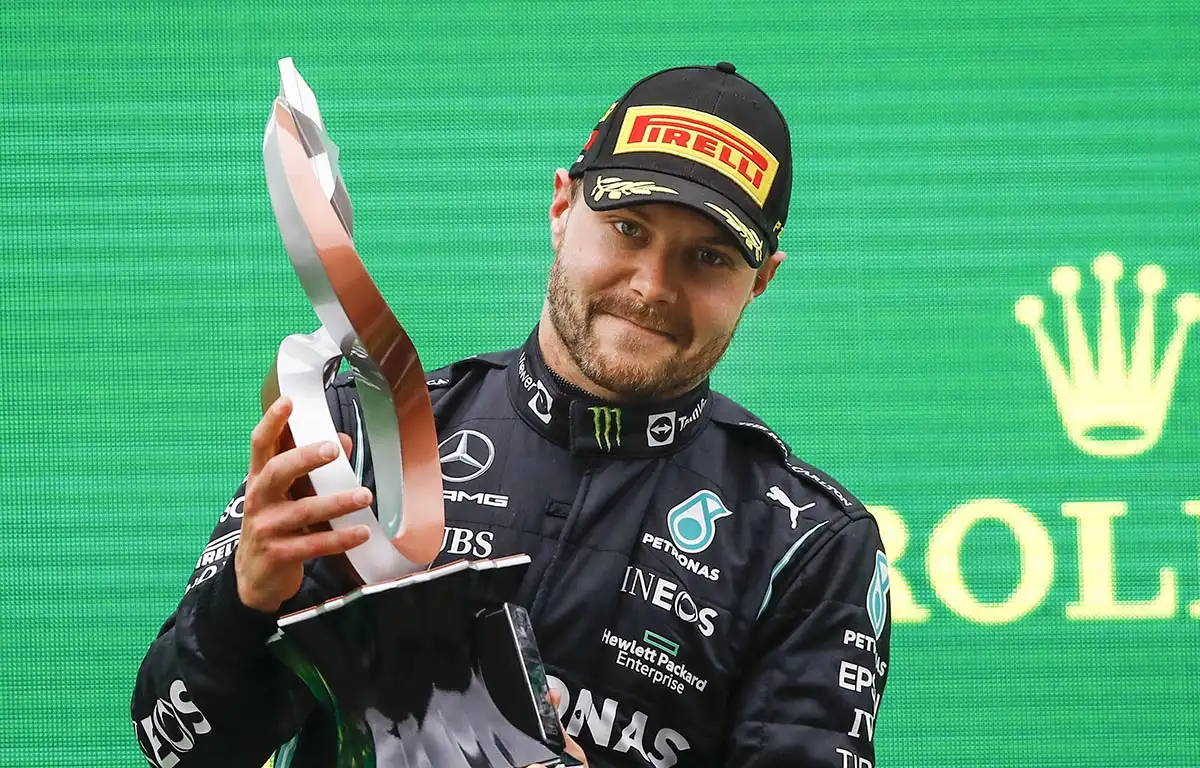
Start with the résumé that internet jokes can sometimes erase. Bottas won ten Formula 1 Grands Prix, took twenty pole positions and stood on the podium 67 times. His Mercedes years from 2017 through 2021 were not a charity placement next to Lewis Hamilton. They were five seasons of qualifying pressure, race victories and constructors' championship work. Mercedes has explicitly credited him with a role in five successive team titles. You can roast his public image without pretending the car drove itself while he negotiated a better haircut.
Of course, being Hamilton's teammate was an impossible job-description exercise. Finish second and the conversation becomes why you did not win. Beat him occasionally and the conversation becomes why you did not do it every Sunday. His competition was not the average paddock colleague; it was a multiple-world-championship standard being applied every weekend. The public shorthand of 'number two driver' can flatten remarkable speed into an administrative job title. Bottas looked like a man filling in an expense report at 320 kilometers per hour, because the workplace demanded consistency before charisma.
The shift after Mercedes is what makes the later character arc so entertaining. At Alfa Romeo and then Stake Sauber, the machinery was less flattering. In 2024 he scored no championship points for Sauber. That is a brutal sporting fact, but it does not erase the driver who had previously mastered qualifying laps against the sport's best. At the end of that spell, Mercedes welcomed him back as its third driver for 2025. The career moved from coveted seat to rebuilding role to reserve status, a trajectory that could have encouraged grim, repetitive media training.
GOATIFY
GOATIFY Formula 1
Discover GOATIFY F1 gear for fans who remember every era of the grid.


Instead, the personality seemed to escape the team-issue packaging. The moustache stayed. The mullet became a small independent media company. His public voice loosened from the perfectly polished phrases that make most post-session interviews sound as though every driver attended the same corporate language seminar. The hilarious irony is that Bottas got more recognizable by acting less like the traditionally marketable Formula 1 driver. Plenty of racers spend fortunes engineering a personal brand. He appeared to discover that looking mildly delighted by his own eccentric decisions was stronger branding than another inspirational quote about 'pushing to the maximum.'
Call that a joke if you like. It also makes sporting sense. A long career has multiple chapters, and 2025 was not a new racing triumph. It was a public reset before another start. The past remains impressive; the character became more interesting when he stopped behaving as if the past had to be his only personality trait.
Cadillac's results are comedy; the rebuilding job is not

Then Cadillac arrived. Formula 1's new American entrant paired Bottas with Sergio Pérez for its 2026 debut, choosing two seasoned drivers rather than expecting the car's learning curve and a rookie's learning curve to negotiate the same corner simultaneously. The pairing was rational. If a new team needs someone to distinguish a driver problem from a mechanical one, experience is not glamorous, but it is useful. The difficulty is that useful development feedback does not come with its own championship points.
As of the November 2026 Las Vegas race, Cadillac remained scoreless and Bottas had recorded repeated retirements. His best listed 2026 Grand Prix finish was thirteenth in China; he finished eighteenth in Las Vegas. Those are not the sort of numbers a former Mercedes race winner dreams of framing in the hallway. When you have ten wins on the career ledger and zero points for your current employer, even the spreadsheets seem to be delivering a deadpan punchline. Bottas does not need a comedian in his press team; the race classification is already auditioning.
Still, the easy roast misses why Cadillac kept him. On 18 November the team confirmed Bottas would remain for 2027 alongside Pérez. Cadillac explicitly emphasized continuity, perspective and commitment as it continues building. The contract decision is not evidence that the opening season was secretly brilliant. It is evidence that the people tasked with running a first-year team value what outsiders cannot readily see in a race-result column: structured feedback, repeatable process and helping engineers understand the car before the competitive foundation is finished.
It is possible to hold both ideas without pretending that one invalidates the other. Cadillac has been slow. Bottas has not magically turned a new constructor into a points machine. The results have been rough, and they deserve examination. Yet removing an experienced development driver after one difficult debut season would also carry costs. A new engine map, an awkward mechanical update, a short run that looks promising but is not repeatable: a veteran can translate those problems into a more disciplined programme.
The fun part is the contrast between the paddock's sober long-term messaging and the off-duty Bottas who might reasonably be planning a very demanding bicycle route before you have finished reading the technical report. He can be an entirely serious investment in Cadillac's learning process and the same man who seems to treat the travel itinerary like a personal endurance challenge. The side quests are not proof that he has abandoned racing. They are proof that racing is no longer required to consume every square inch of the public character.
GOATIFY
GOATIFY Formula 1
Shop GOATIFY Formula 1 apparel while the newest team builds its next chapter.


A 350-kilometer commute and the gravel-bike second career
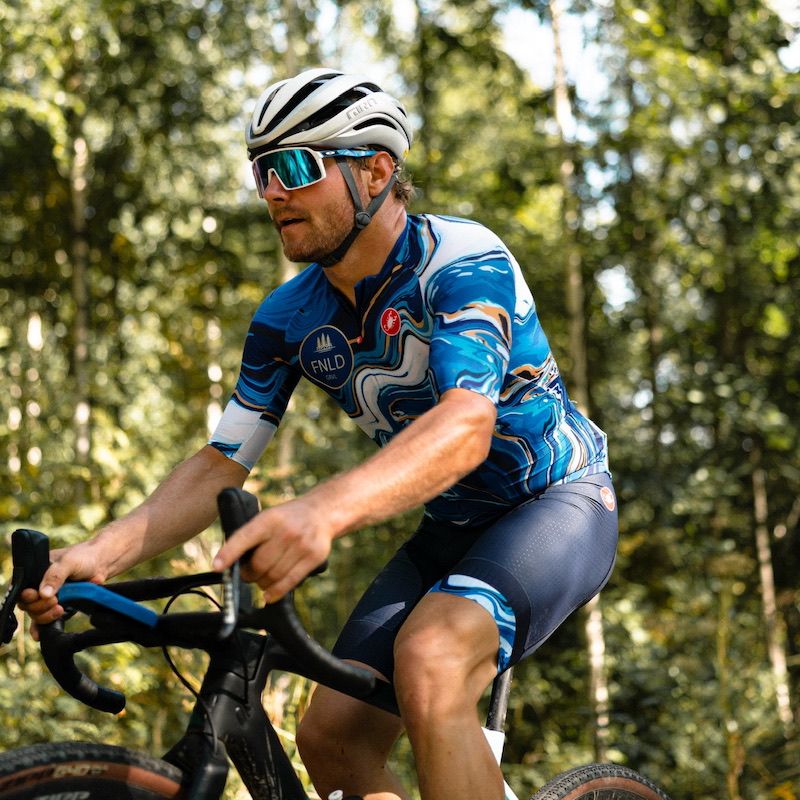
If Formula 1 has a paddock competition for most convincingly optional second occupation, Bottas is a strong entrant. Cycling is not just a prop wheeled into an airport photograph. He is deeply involved in gravel riding and in FNLD GRVL, the event staged in Finland. Racing a car requires managing a narrow set of physical and cognitive demands inside a highly organized team. Gravel racing requires deliberately heading onto a rough road for hours, with fewer comforts and considerably more opportunities to question one's hobbies. Naturally, he enjoys both.
In October 2026, between the unusual Bahrain round and the Singapore Grand Prix, he chose to cycle roughly 350 kilometers from Malaysia to Singapore rather than take the short flight. One reported stage covered more than 160 kilometers in nearly six hours. That is a genuine travel decision, not an invented viral stunt. A normal person might describe the distance as something to avoid. Bottas seemed to view it as the kind of journey that becomes more attractive once you remove the convenient transport option. His airline loyalty account must regard him as a personal betrayal.
He also earned a place at the gravel world championships after a qualifying result in his age group, though the world event coincided with his Formula 1 duties. That scheduling clash is peak Bottas: one world championship wants him to race an expensive machine while another could use his legs. The calendar, not the athletic ambition, forced a choice. In a sport where drivers are trained to say they have no distractions, he has managed to make the distraction sound like another elite-level training block.
There is substance beneath the joke. Endurance cycling helps explain his visible enthusiasm for effort when nobody is handing out Grand Prix trophies. Gravel events offer a community in which the winner is not automatically defined by Formula 1 celebrity and where the experience has value beyond broadcast numbers. His connection to professional cyclist Tiffany Cromwell has been part of that public cycling life, but the important point here is his own sustained participation rather than any assumptions about private relationships.
The charming absurdity is that a man who once had to make fractions of a second decisive now spends his free time voluntarily collecting hours in the saddle. In motor racing, a slow afternoon invites a difficult debrief. On a gravel bike, a long afternoon is often the objective. Perhaps the most impressive performance is getting people who argue fiercely about tyre compounds to suddenly discuss tyre pressure on a bicycle instead.
Coffee, the mullet and a personal brand that escaped the garage
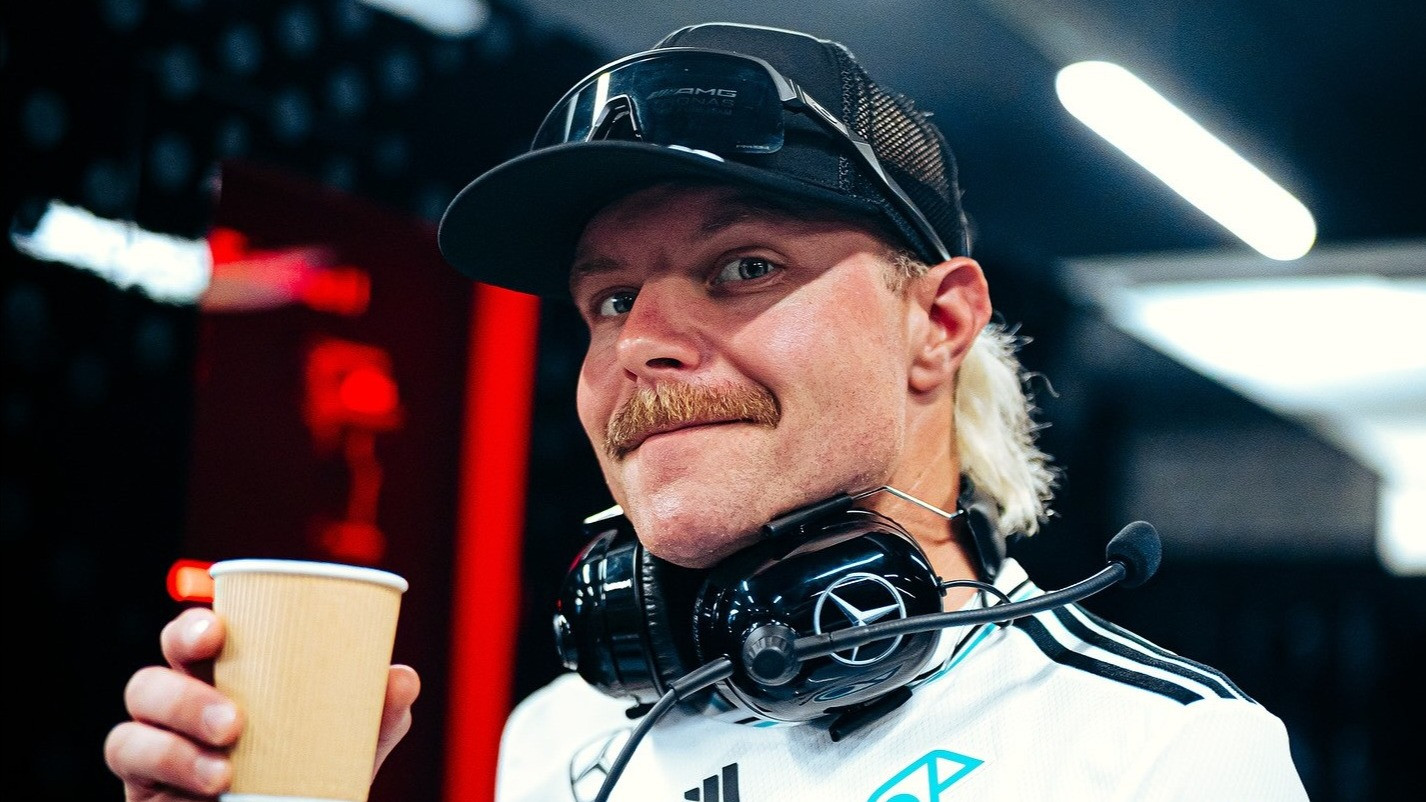
The bicycle is only one room in the Bottas extended universe. The Finnish driver has discussed investing in Kahiwa Coffee Roastery in his hometown of Lahti, alongside wine and gin projects. In a past interview he described the coffee investment as roughly a twenty-percent stake and explained that these ventures were rooted in interests he wanted to pursue for the long term. The precise commercial performance of each project is not established by a moustache and an Instagram post, so this is not a claim that every product is an international empire. It is a much more modest and funnier observation: the professional racer has built a portfolio of things to be enthusiastic about when the checkered flag is not involved.
GOATIFY
GOATIFY Formula 1
Explore F1 fan designs that match the paddock's lighter side.


There is a recognizable personal logic. Drivers spend their early adult lives in environments where sponsors, engineers and schedules determine a considerable share of their public expression. Coffee, cycling and small consumer ventures offer room to create something with a different pace and tone. You can be good at a demanding job without treating it as the only acceptable subject at dinner. Bottas seems unusually willing to demonstrate that truth out loud, with a grin and a haircut that is indifferent to focus-group feedback.
The famous mullet and moustache help, because the visual joke is instant. F1's hospitality buildings can look like laboratories of polished luxury. Bottas arrives looking as if he might lead a highly organized endurance ride, make an excellent espresso and then ask where the nearest public sauna is. That sentence is humorous characterization, not an itinerary or a fabricated event. Unlike a carefully rehearsed sponsorship persona, it feels recognizably specific. You could identify the character in a silhouette. Try doing that with a dozen matching black team polos.
None of this requires claiming he is secretly more interested in coffee than competition. His 2027 extension says Cadillac wants his racing experience. He remains obligated to the sport's technical and physical demands. But the side quests have changed the stakes of a difficult season for viewers. A bad race can be discussed honestly without casting the driver as an existential failure, because there is another public narrative beyond the result. That is rare in a culture that often treats every retirement as a verdict on the person.
And that, finally, is why the roast almost turns into admiration. Bottas is not beating the grid in his current car, and there is no honest reason to pretend otherwise. He is, however, beating the paddock at being unmistakably himself. A career once defined by trying to catch Hamilton has become a two-track story: help Cadillac build a credible team, and keep enjoying the world outside a cockpit. If the next chapter brings points, wonderful. If it brings another giant gravel ride and a particularly good cup of coffee, fans already know how to appreciate that chapter too.
The sporting verdict is complicated, which makes the personality story far more interesting than a simple meme. Bottas owns a genuine winning résumé; Cadillac's 2026 results are genuinely poor; the team has nonetheless chosen experience and continuity for 2027. Meanwhile the cycling events, the business ventures and the relaxed sense of humor are real parts of the public picture, not substitutes for on-track analysis.
The joke is that the side quests have become so memorable they sometimes threaten to steal the headline from the main mission. The deeper point is that they have given Bottas an identity that survives a bad qualifying session. Formula 1 rewards ruthless specialization. Bottas has discovered the audience also enjoys a complete person. The Cadillac still needs to get faster. The mullet, unfortunately for every driver's carefully managed personal brand, is already miles ahead.
GOATIFY
GOATIFY Formula 1
Shop GOATIFY Formula 1 shirts, hoodies and racing stickers.





















