

Russell's £25 Karting Gateway Leads to 25 Funded Seats. Here's the Catch.
GOATIFYGeorge Russell has put his name and experience behind a new route into motorsport, but the headline is not another Formula 1 driver launching a merchandise line or signing a junior prospect. His GR63 Karting Academy at Silverstone is designed to give 25 children a fully funded racing championship in 2027, after an initial selection process that begins this December. It targets boys and girls aged eight and nine, precisely the age when enthusiasm can become serious training — and when family budgets can quietly end the dream.
The scheme has a defined ladder: inexpensive open qualifying, a one-day shootout, an eight-round funded championship and a final assessment that awards one winner a financed 2028 karting season. Russell is working with Silverstone and the British Racing Drivers’ Club, whose president David Coulthard has endorsed the project. The attractive part is its clarity; the important test is whether the pathway genuinely finds fast, adaptable children who would otherwise be priced out.
Here is what families would actually need to do, what the academy covers, and why the distinction between access to a race seat and a promise of an F1 career matters.
The first gate is affordable, but it is not free
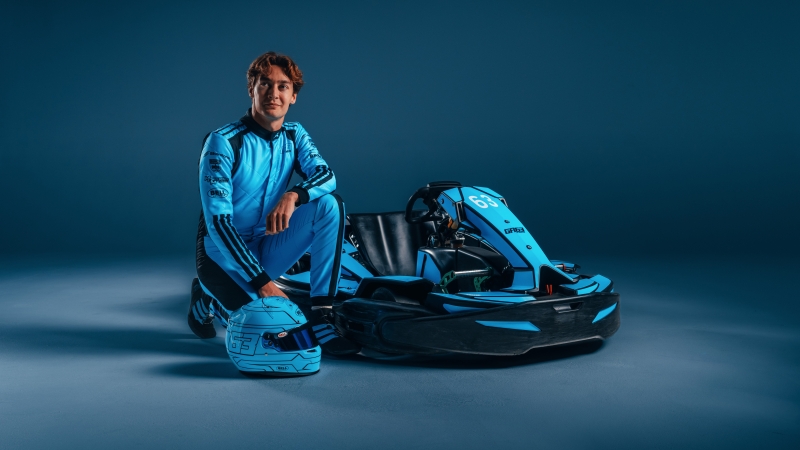
Stage one starts at Kart Silverstone in December 2026. Families book a junior arrive-and-drive session and children put down a timed lap in an academy qualifying environment. The official Silverstone venue and the academy's published programme list sessions from 6 to 31 December at £25 for a 15-minute qualifying attempt. Families should still check the live booking calendar for available sessions before making travel arrangements; published event dates do not guarantee a space on every day.
The first round is open to eligible eight- and nine-year-olds, rather than being reserved for children who already own racing machinery or compete for a team. The official venue says drivers can enter one or more timed sessions, with 80 selected for the January shootout. An arrive-and-drive model removes the immediate need to buy and maintain a kart, although travel and repeated attempts can still add costs. A £25 entry is a meaningful reduction in the barrier to being seen, not a guarantee of selection.
Those 80 qualifiers then return for the GR63 Shootout on Sunday, 31 January 2027. It is a more complete examination than a single fast lap: the organisers describe practice and qualifying races before the field is cut to 25. This stage costs £75 per driver. A child who advances from one qualifying attempt therefore faces at least £100 in the two published entry charges before the funded racing stage; extra attempts and transport are separate considerations. The academy uses an eligibility framework linked to Commonwealth citizenship, so families should check the current official rules before booking.
The progression is steep on purpose. Only 25 of the 80 shootout entrants move into the championship — fewer than one in three — and the vast majority of the original qualifying field will not obtain funded seats. That does not make the project hollow. It makes the judgment of the selectors crucial. Lap time is measurable, but pressure, adaptability, racecraft and consistency become more useful signals when quick children are placed in comparable equipment and asked to compete against one another.
GOATIFY
GOATIFY Formula 1
George Russell is investing in the next generation of racers. Explore GOATIFY's Formula 1 designs while the karting pathway opens.


For Russell, the earliest intervention may be the most valuable. Many conventional racing ladders ask parents to spend serious money before a child's performance is visible to the people who can offer support. Here, at least, an initial performance can precede substantial championship funding. The academy will be judged as much by the quality of that first filter as by the identity of its eventual winner.
Twenty-five drivers get eight fully funded racing rounds
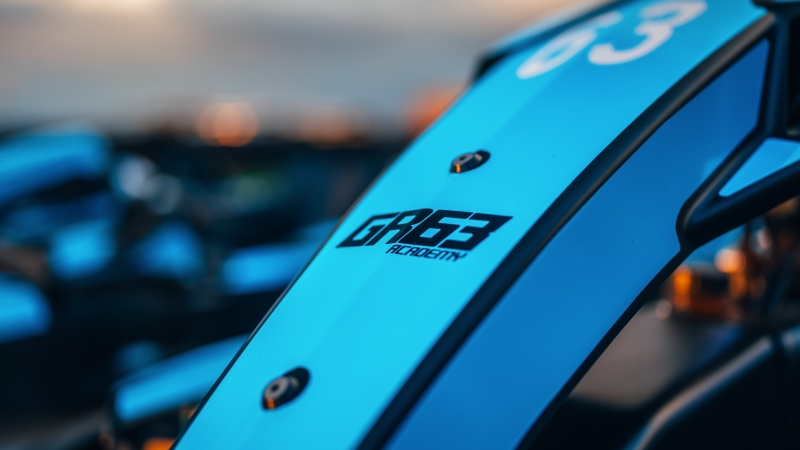
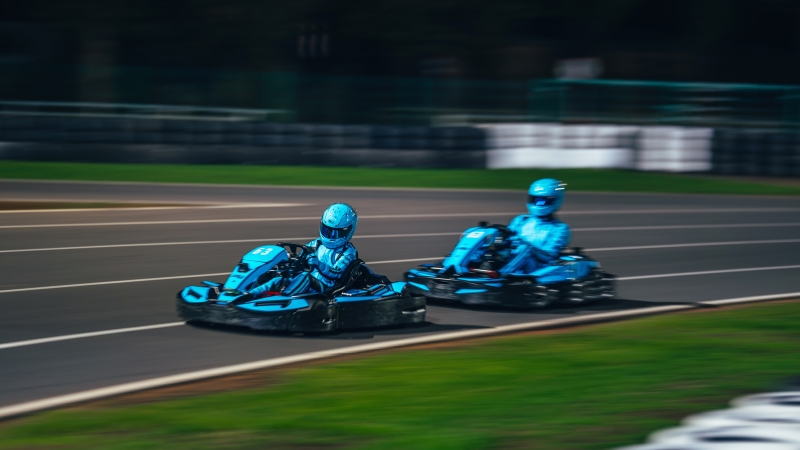
The 25 successful shootout drivers earn a place in the GR63 Championship, running at Kart Silverstone between March and November 2027. Eight rounds, rather than one winner-takes-all qualifying afternoon, create room for improvement over a season. The organiser lists dates of 28 March, 18 April, 2 May, 20 June, 18 July, 12 September, 3 October and 14 November. Different circuit layouts are planned, reducing the chance that mastering one sequence of bends becomes the only useful skill.
From this stage onward, the academy describes participation as fully funded. Each of the 25 children will be provided academy overalls, helmet, gloves and boots, as well as a funded race programme. That is a major shift from self-financed karting, where machinery, servicing, tyres, travel and race entries can rapidly separate participants by family resources. The details of personal travel expenses and incidental costs are not established in the announcement, so fully funded championship participation should not be confused with an unlimited personal-expenses allowance.
A championship is a better evaluation tool than a single qualifying lap because it asks different questions. Can a driver defend without compromising the exit? Can they recover when the first lap goes badly? Do they improve as grip, weather and track configuration change? A child who is quickest at one session may not be the driver who learns fastest over eight events. The competitive structure allows coaches to observe both immediate pace and the rate of development.
The academy is branded around Russell's racing number, 63, but the technical lesson is broader than personality. Early-stage coaching works best when the drivers have comparable opportunities to practise and clear feedback about what they can improve. Setting a common venue and a common framework can make those comparisons less distorted by wildly different equipment budgets. It will not eliminate every inequality: some families will still live much closer to Silverstone, and some children will arrive with more track time than others.
The venue’s published programme describes a complete racing kit and changing track configurations, while the academy site adds that the championship sits at the centre of Russell's planned mentoring and development pathway. The difference between a photo opportunity and a serious academy will be visible in the consistency of coaching, the transparency of evaluations and the quality of the racing environment offered across the full eight-round season.
Even for drivers who do not make the final five, a year of supported racing could be an important result. A well-run, comparable season gives a young karter experience and evidence of performance that one impressive qualifying session cannot. That is the practical value behind the slogan that talent should count for more than circumstance.
The final prize is a 2028 season, not a guaranteed F1 seat
The championship's top five finishers are scheduled to return to Silverstone for a final shootout in December 2027, with its precise date still to be announced. The organisers say the evaluation will look beyond raw speed to include fitness, racecraft, media skills and broader driving talent. The winner gets a fully funded karting campaign in 2028. It is a meaningful continuation of development, but the prize is not an automatic promotion to Formula 4, a Formula 1 junior-team contract or a promise of a professional seat.
GOATIFY
GOATIFY Formula 1
Eight funded karting rounds give young drivers a serious test. Browse GOATIFY Formula 1 apparel and accessories for every race weekend.


That distinction should make the programme more credible rather than less. Most eight- and nine-year-olds are years away from a single-seater decision, and progress can be uneven. A sustainable development programme can help an exceptional young driver make the next informed step without pretending that a world championship can be predicted from childhood. Even Russell, whose F1 number is now attached to the project, had to build from national and international karting toward increasingly demanding categories.
Russell has said his own karting beginnings taught him fundamentals he still relies upon. His partnership with Silverstone and the BRDC makes sense in that light. Silverstone supplies a recognisable racing home and karting infrastructure, while the BRDC brings a tradition of driver development; Coulthard, a former F1 race winner, leads the club. The model also gives Russell a legacy project outside the weekly fight for points, without requiring him to claim he has already identified the next champion.
It follows a wider movement of drivers taking a more hands-on interest in the junior ladder. Lando Norris has also backed a development initiative, but the programmes should not be treated as identical: Russell's published first-year offer centres on eight- and nine-year-old karters receiving support at a single venue, with funding attached to selection and a later season prize. The interesting question is not which F1 star has the more recognisable logo. It is which structure lowers the real cost of identifying and developing talent.
There are limits worth keeping in view. The opening intake is restricted by age and eligibility, and all of the planned championship racing takes place at Silverstone. A child living far from the circuit faces more travel than a local family, even if the core competition is funded. The initial two stages also carry published charges. Those constraints do not erase the value of subsidising 25 racing seasons; they are simply the details by which an accessibility claim must be measured.
The earliest independent measure of success will come before anyone reaches an F1 paddock. Can promising children with little previous racing exposure compete in qualifying? Do selection decisions reward fast learning as well as pre-existing experience? Can the 25-driver field stay competitive and improve across the year? And does the funded 2028 prize give its recipient a sensible bridge to the next step? If the answers are yes, GR63 may become a useful template rather than a short-lived celebrity project.
Russell's academy creates a clear path from a £25 first opportunity to an eight-round funded championship, then a selective 2028 racing award. There are unavoidable filters and practical costs, but families can at least see the dates, age rules and selection stages in advance. That is more useful than a vague promise to discover a future superstar.
The December qualifying sessions will provide the first test of its reach. The 2027 championship will provide the more important test of whether access is followed by meaningful development. If GR63 succeeds, the biggest result may be measured in young drivers who remain in racing long enough to discover how good they can become — not simply in whether one of them eventually drives a Formula 1 car.
GOATIFY
GOATIFY Formula 1
Shop GOATIFY Formula 1 shirts, hoodies and racing stickers.


















