

Bakole Replaced Opetaia. Wilder Now Faces a Bigger Pressure Test.
GOATIFYDeontay Wilder no longer has to wonder whether he will box on December 11. Martin Bakole has taken the vacant place opposite him on the Tyson Fury–Anthony Joshua undercard in Cardiff, replacing Jai Opetaia after the unbeaten cruiserweight withdrew with a hand injury. That is a much bigger change than a name being crossed out of a bout sheet. Wilder has traded the challenge of an elite smaller southpaw testing heavyweight waters for a massive, seasoned heavyweight who wants to close distance and exchange.
Bakole, 33, was already preparing to appear on the bill against Solomon Adebayo, which makes the switch easier to arrange than importing a completely untrained replacement. But it does not mean he prepared for Wilder. The American, 41, brings a famously dangerous right hand and questions about how much of his old timing survives. Bakole brings genuine size and volume, alongside a recent record that makes him hard to trust as a favorite. Their meeting is a collision of strengths and vulnerabilities, not a guaranteed knockout festival.
Bakole earned this stage against Anderson — but has not won since
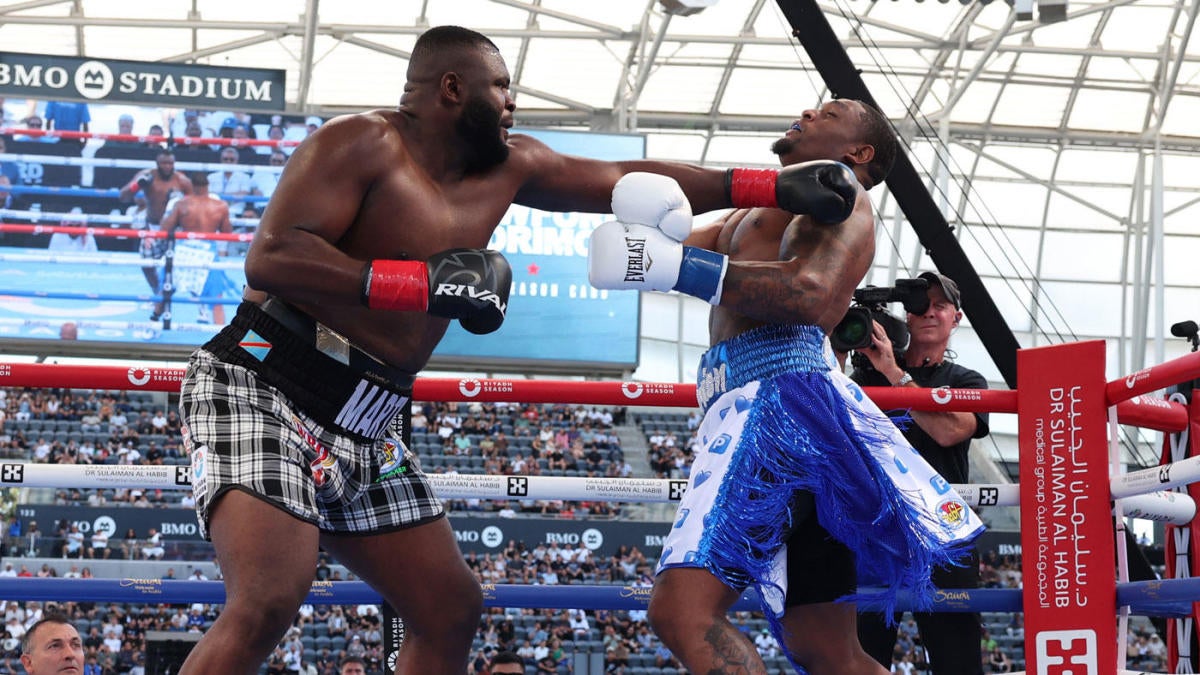
For Bakole, the announcement is both an upgrade and a risk. He had been set for a lower-profile meeting with Solomon Adebayo on the same show. Instead, he will share the chief-support slot with an opponent whose punches carry an entirely different consequence. A win over Wilder would put Bakole back into a heavyweight conversation that has largely moved on without him. A knockout loss could leave his most important achievement looking like a distant memory.
That achievement came against Jared Anderson in August 2024. Bakole walked the unbeaten American prospect down, hurt him early and stopped him in the fifth round. What made the performance memorable was not just force. Bakole was comfortable occupying the pocket, letting his hands go in combinations and forcing a young fighter to answer punches before he could establish his own rhythm. Anderson's reputation amplified the result, but the mechanics were real: pressure followed by sustained, accurate offense.
Since then, the evidence is less flattering. In February 2025, Bakole replaced Daniel Dubois at extremely short notice and was stopped in the second round by Joseph Parker. That result needs context. Taking a major heavyweight contest with virtually no preparation and arriving in less-than-ideal condition is not the same as losing after a normal camp. Nevertheless, the knockout exposed how badly a slow or unbalanced entry can go against a patient, decisive puncher. Parker did not need to dominate every exchange; he needed the correct moment.
GOATIFY
GOATIFY Boxing
Explore boxing fan gear while weighing Bakole's comeback stakes.


Bakole subsequently drew with Efe Ajagba in May 2025, meaning he arrives at this announcement without a victory since the Anderson fight. He is 21-2-1, with 16 stoppage wins. The distinction between his best night and his more recent form is not an excuse to dismiss him. It is the central question. Can he reproduce the focused, conditioned pressure that overwhelmed Anderson, or will Wilder find the kind of opening that Parker found? Moving up the card raises the reward, but it also puts every answer in front of a much larger audience.
Wilder's right hand is still the danger. Getting room to throw it is the test
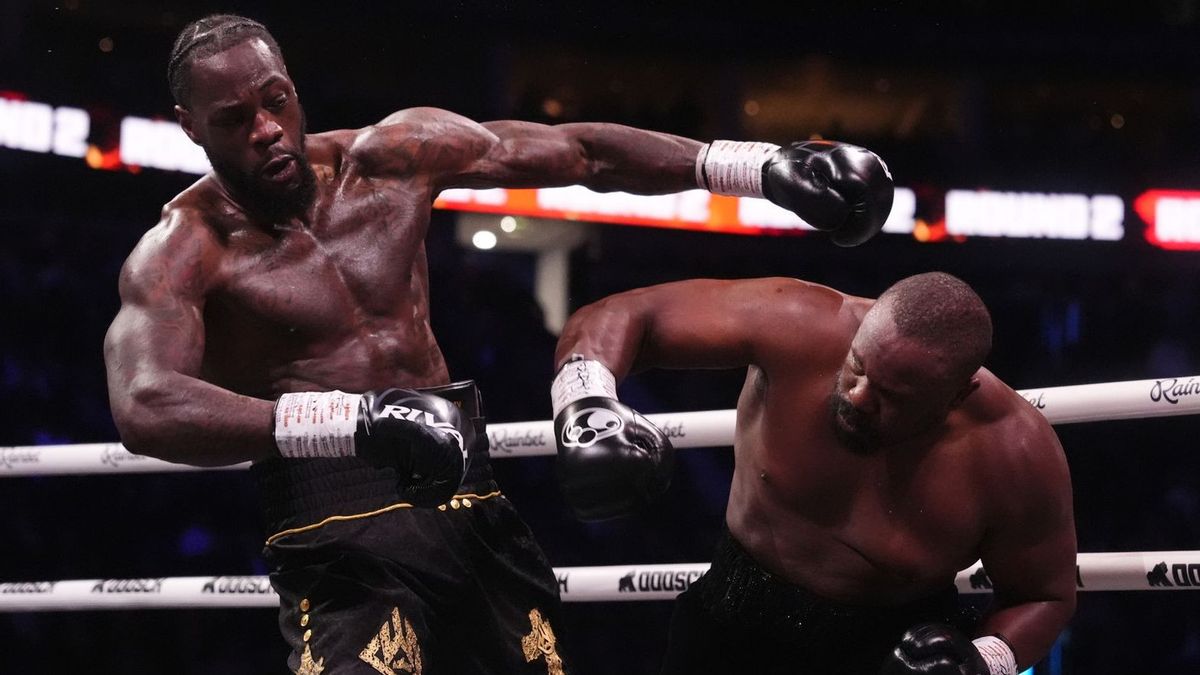
It is tempting to describe this as a simple choice between Bakole's size and Wilder's one-punch finish. Heavyweight fights are rarely that tidy. The first contest will take place before anyone lands a decisive blow: who controls the distance, who gets to lead, and who is forced to reset? Wilder is most dangerous when he can line up a target, take half a step and send his right hand down a clear path. Bakole wants a smaller gap between the two men, one in which he can hit the body and head without continuously chasing.
Wilder's April split-decision victory over Derek Chisora showed both reasons to believe and reasons for concern. He still produced meaningful power and finished ahead on two judges' cards in a bruising 12-round fight. But it was not the clean, one-sided destruction associated with his old WBC title reign. There were exhausted stretches, clinches, awkward exchanges and moments when the opponent made him work in uncomfortable positions. Treating that win as proof of a complete return would be as careless as treating it as failure.
Earlier defeats to Joseph Parker and Zhilei Zhang remain relevant because they showed what happens when Wilder cannot dictate his preferred striking range. Parker's composure denied him many of the openings he wanted, while Zhang showed the penalty for getting his positioning wrong against a powerful opponent. Bakole is not a replica of either man. He generally prefers more sustained forward offense, and that could help or hurt him. Pressure can reduce Wilder's space, but predictable straight-line pressure may also give the American a stationary target.
Wilder's jab may decide more than the knockout highlights suggest. A busy, credible lead hand can stop Bakole from entering for free, create rhythm changes and set up the right. If Wilder abandons that responsibility and waits for one perfect punch, Bakole has a chance to bank rounds by activity and keep him defending. Conversely, if Bakole overcommits to long combinations while his head stays on the center line, one clean counter may erase several minutes of good work.
This is why a prediction based on knockout percentages alone misses the story. Wilder has 43 knockouts in his 45 wins, an extraordinary number, but the relevant question today is whether he can build the situation in which his punch still matters most. Bakole has enough size to push him backward; he must also have enough discipline not to chase that advantage straight into trouble.
GOATIFY
GOATIFY Boxing
Find boxing-inspired designs as Wilder's striking style meets Bakole's pressure.
Opetaia's withdrawal changed the tactics, not the calendar
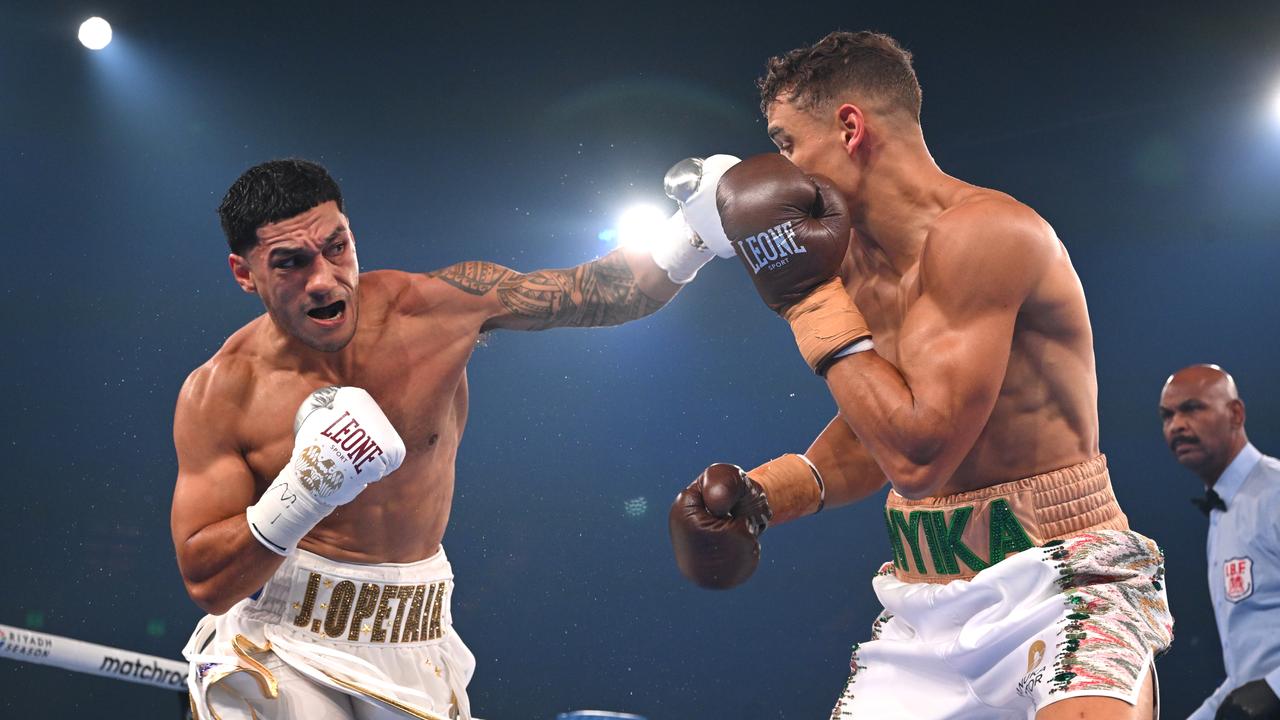
The cancelled Wilder–Opetaia bout offered a completely different puzzle. Opetaia, an accomplished cruiserweight, was planning to step into the heavyweight division for a high-profile test. He would have needed to handle Wilder's reach and power while using his own speed, timing and southpaw craft to avoid being trapped. That combination made the booking interesting even before anyone could judge how the weight difference would behave in the ring.
A reported hand injury removed Opetaia from the December 11 card. His exit did not cancel the main event, nor did it require moving the show. It simply left one of the most commercially important undercard places empty. Several heavyweights publicly expressed interest, but organizers ultimately selected someone already preparing to fight on the bill. That reduces the logistical challenge: Bakole already had a training target, travel plans and a reason to be physically ready in December.
Still, preparation for Solomon Adebayo and preparation for Deontay Wilder are different assignments. A fighter may have a full camp in the conditioning sense and a very short camp in the tactical sense. Sparring choices, defensive priorities and the opponent's punching tendencies cannot be rewritten overnight. Bakole will have roughly 18 days between the November 23 announcement and fight night. That is enough time to sharpen specific habits, not enough time to build an entirely new style.
Wilder faces the mirror-image problem. He was preparing for a smaller southpaw who relied on movement and technical combinations. Now he will meet a huge orthodox fighter who can press into his space. The adjustment may seem favorable because Wilder is a natural heavyweight and Bakole presents a larger target. Yet a bigger opponent means different clinches, different pressure on the ropes, and longer stretches in which the right hand cannot simply be thrown from its preferred range.
Bakole's 2025 late-substitute defeat to Parker is a warning against pretending that the calendar is irrelevant. But it is also a warning against using the Parker result without context. This time Bakole has been in camp for the event rather than arriving with only days to prepare to fight at all. He may be better conditioned. Whether he has made the correct opponent-specific adaptations is a separate question that only the fight can answer.
Cardiff gets a stronger heavyweight risk test, not a guaranteed classic
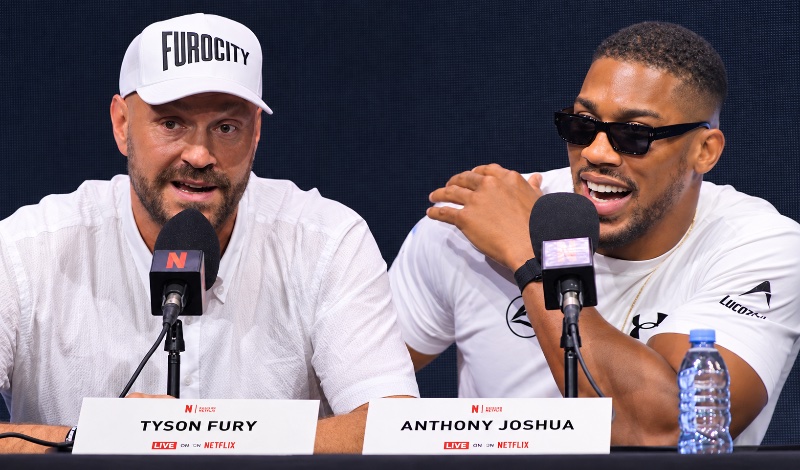
Tyson Fury against Anthony Joshua remains the reason this stadium show attracts attention beyond habitual boxing viewers. It has been discussed for years, repeatedly delayed and finally placed on the calendar for December 11 at Cardiff's Principality Stadium. The co-main event will not eclipse that history, but it can determine whether the undercard feels like a meaningful series of sporting contests rather than an extended wait for the headliners.
GOATIFY
GOATIFY Boxing
Browse GOATIFY Boxing gear before the December Cardiff heavyweight card.
Wilder versus Opetaia promised a high-level clash of styles across weight classes. Wilder versus Bakole is less unusual and potentially more combustible. Both men belong in the heavyweight division; both have experienced dramatic swings in reputation; both could change their next year with one good performance. That gives the replacement genuine sporting stakes even without a major world title on the line.
The revised main card also includes Moses Jolly against Igor Macedo and Da'Mazion Vanhouter against Michael Essomba. Every announced main-card contest is a heavyweight bout. That is a clear identity for the show, but an all-heavyweight lineup does not guarantee constant action. Large fighters can spend rounds measuring each other, and a bout built entirely around knockout expectations can become tactical or tense rather than spectacular. The more useful question is whether these matches have enough competitive balance to hold attention when nobody gets dropped.
The outcome would be especially significant for Bakole. A clean win over a globally recognized former champion would restore much of the momentum lost since the Anderson breakthrough. It would not automatically make him the division's leading contender; recent results still matter. But it could show that his reputation as a difficult opponent belongs to the present rather than to an older highlight reel.
For Wilder, winning clearly would carry its own value. Beating Chisora proved he could survive a long, chaotic fight. Handling Bakole would require a different kind of control against an opponent with more natural size and a strong inclination to walk forward. A disciplined performance could rebuild confidence in Wilder's ability to compete with top heavyweights. A loss, especially an ugly one, would intensify the question of how much career he has left.
Neither fighter needs an invented championship narrative to justify this match. One is trying to turn an uncertain comeback into another serious run; the other is trying to turn a major breakthrough into consistent relevance. In Cardiff, that is enough.
Bakole stepping in is better understood as a different fight, not simply a replacement of similar value. The Congolese heavyweight brings the size and pressure to keep Wilder uncomfortable, but his recent inactivity and losses make sustained sharpness an open question. Wilder remains the more explosive single-shot threat, yet he cannot afford to spend long passages waiting for that shot while Bakole works.
The most persuasive prediction is therefore conditional. If Wilder wins the battle for range with his jab and keeps his right hand available, Bakole will have a difficult evening. If Bakole makes every exchange close, forces Wilder backward and keeps his guard intact on entry, the former champion may find the 12-round Chisora struggle was only a preview of a deeper problem. December 11 will not answer every heavyweight question, but it will provide a clear verdict on two of the division's biggest unresolved reputations.
GOATIFY
GOATIFY Boxing
Shop GOATIFY boxing shirts, hoodies and stickers.





















